
Reading time: 10 min.
Prevention starts with anatomical knowledge, the use of products backed by evidence and continuous training. How to anticipate these situations and what to do when they arise
In aesthetic medicine, injecting carries a risk, and that risk can result in a complication. No professional is exempt. That is why the question is not only how to avoid these situations, but also how to identify them and how to resolve them when they arise. And the best tool for all three is the same: knowledge.
Prevention starts with accurate anatomical knowledge of the face and a thorough understanding of the products used. That includes using approved materials that are backed by scientific evidence. Buying hyaluronic acid online, for example, leaves the professional with no guarantee of how that product will perform.
Alongside that foundation is training in managing complications. When an abnormal situation arises, a protocol must be applied to resolve it; a situation that inevitably causes concern and nervousness. If that nervousness is compounded by not knowing how to act due to a lack of training, everything becomes more complicated.
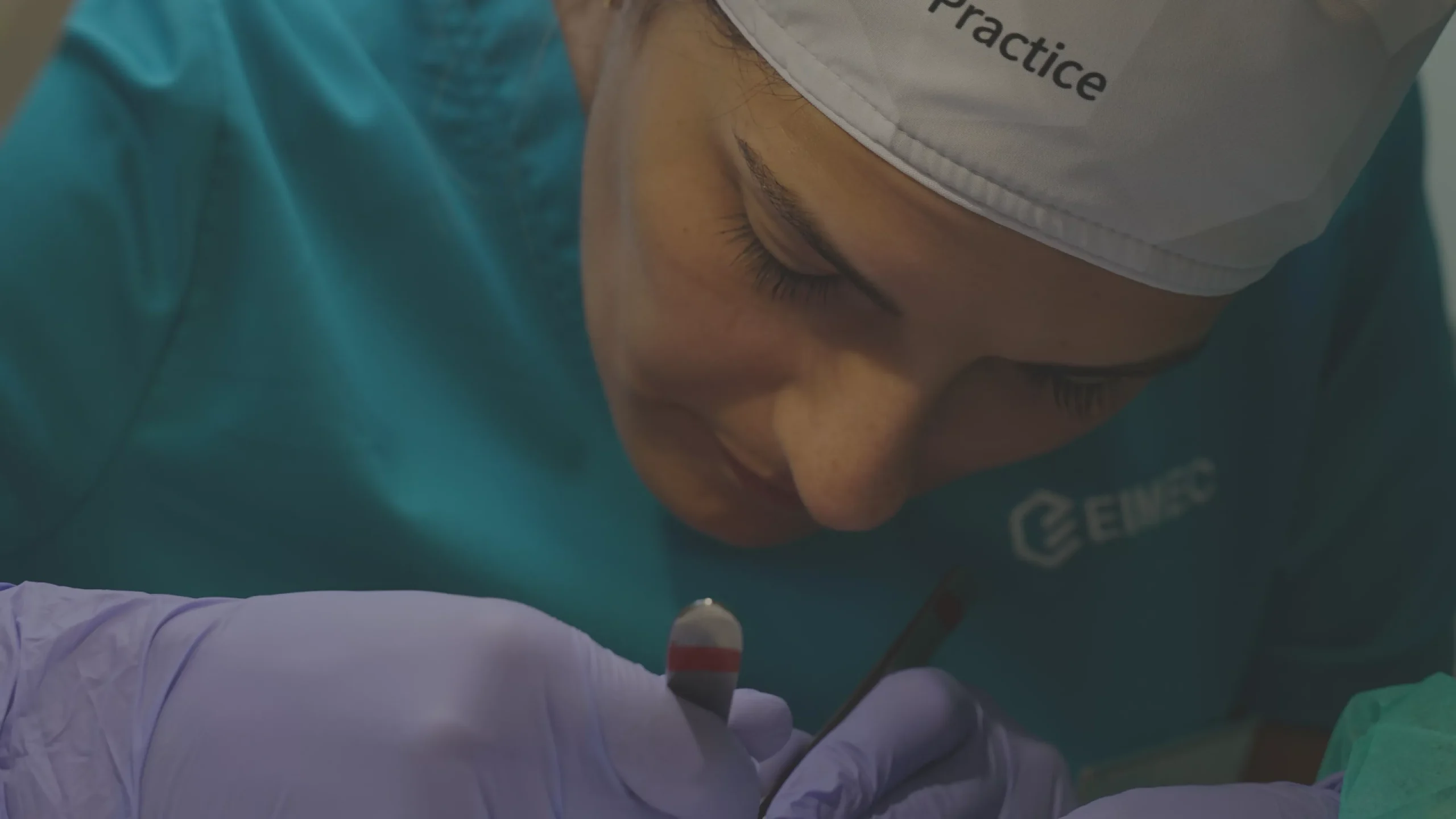
Training in managing complications is not straightforward. A complication cannot be induced in a patient, for example, to show the doctor undergoing training how to resolve it. That is why EIMEC runs the Course in Managing Complications in Facial Aesthetic Medicine, which includes rigorous hands-on training on fresh cadaver specimens. “This way, when the professional faces a complication, it will not be the first time they apply the protocol; they will already have the knowledge consolidated in a practical way,” explains EIMEC’s academic coordination team.
New techniques and consensus
The other key is keeping up to date. Sometimes a doctor trains at one point and considers the subject closed. But new products, new techniques and updated consensus on how to manage complications keep emerging. Staying up to date is also part of the job.
Prevention also depends on the correct application of products, especially hyaluronic acid and collagen inducers, which are now very common in the consulting room. It is essential to know how to place them in the correct plane, in the correct way and with the appropriate instrument. Even so, no one is immune to something going wrong, because injecting always carries a risk. Hence, knowing how to manage a complication is just as important as knowing how to prevent it.
Another point is knowing how to identify the different events that may arise. An adverse effect is not the same as a complication, and it is worth learning to tell them apart so that each one is treated appropriately.
Finally, there is reporting. “No one wants to talk about them, because if I say I have had a complication, it seems I am a bad doctor, and that is not necessarily the case. Often they arise from patients’ pathologies or comorbidities”, EIMEC points out. Why is reporting them key? When a professional reports a complication or an adverse effect, it helps their colleagues avoid repeating the same mistake or facing the same situation without information.
Avoiding complications is, above all, about training and keeping up to date in anatomy, in the practical management of complications and in the correct use of products. This is where both patient safety and the professional’s peace of mind are at stake.